
[Warning! This post contains spoilers of (at least some of) the books discussed so tread with care!]
I read a whole lot of books for the sheer pleasure of being immersed in the story, the adventure, a world that is not my own. Correction, that is my main reason for reading anything at all. I want books to provide an escape, to take me to someplace else, to capture me so totally that I basically become someone else while reading their story. This goes for fiction and non-fiction alike, though sometimes I do read out of simple curiosity and the need to learn more about something or someone, but that’s just a different kind of pleasure.
No matter what I read, though, I always learn something, always yearn to understand more. Even the fantasy book with no seeming connection to our real world may invoke ideas, thoughts, feelings, a curiosity that has me exploring the topic further.
H once asked me what I’m doing exactly, am I reading or facebooking, when I go back and forth between my book and my phone.
I was googling. When I’m reading a book, be it fiction or non-, there are references to things, people, places, events… And I need to know. I need to know if this or that is accurate, if real world references in fiction are pieces of real history inside of the story, and to what extent. I need to know if a character associated with a real historical character is real or made up. I want to see a picture or a painting that was described, I need to listen to songs that are referenced, I need to see pictures of the actual places of the story. I need to know MORE than just the story. So I google. Read more. Google some more. Read more.
In this sense, those people of olden times, who were scared of [women] reading, were most certainly right: reading does cause ideas and thoughts and thought processes. It’s just that that shouldn’t scare anyone. It doesn’t scare anyone who isn’t afraid of losing their power over said readers.
This brings me to one of the things I’ve been pondering, or encountering, in my recent reads. Not exactly the fear of women reading, but the fear of women living their own lives, without the influence and control of men [in their family]. How horrible it is, for a woman to have their own mind! To refuse to marry, or to have a career, to be successful! Not to all men, maybe nowdays not even most men, but we still live in a highly male-dominated world, where grave injustices are inflicted on women, just for the audacity of not needing a man.
Reading about women, whose life is controlled by the men in their family, to the extent of sticking them into a mental asylum (or psychiatric ward, nowadays), just because they’re not succumbing to their will, puts me in a state of frustrating helpless rage. How can they do that? Why are the men listened to, the women silenced?
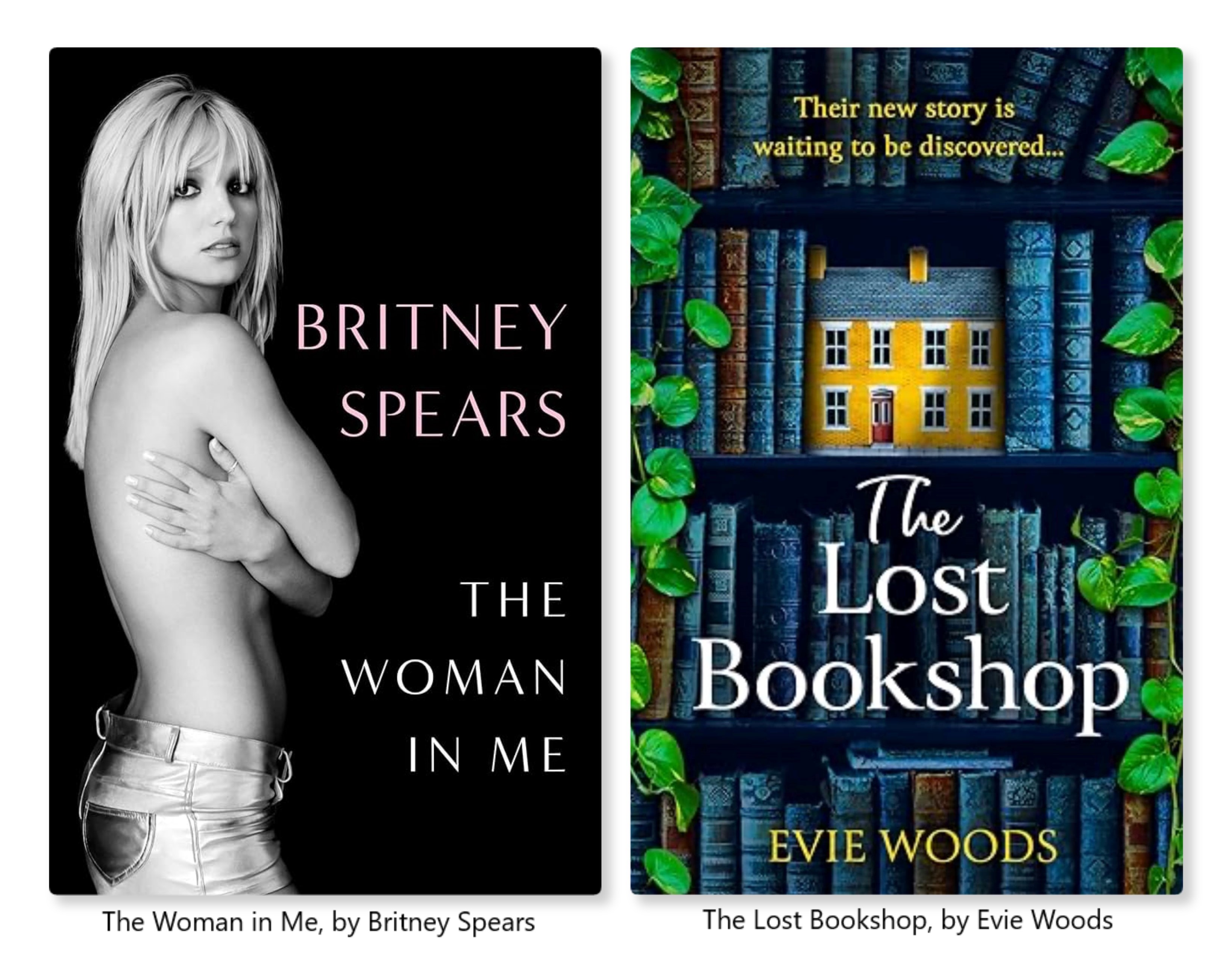
Real life, 21st century – Britney Spears: The Woman in Me
Britney Spears whose abusive alcoholic dad was given full control of her life, career, and estate when she was devastated after her husband and kids’ dad brutally abandoned her, and essentially took the kids he’d had no interest in before the divorce. Everyone listened to Kevin Federline, to Britney’s dad, even her brother, never asking how Britney was really doing, how she could really be helped. Sure, she did some crazy shit, but how many male rock stars do way worse stuff ALL THE DAMN TIME and nobody thinks they should be controlled and locked up!
All because a greedy MAN wanted to get his hands on HER success and money.
Fiction, 20th century – Evie Woods: The Lost Bookshop
Opaline refused to marry the total stranger her brother had picked for her, trying to force her. So she ran away, making a life for herself in Paris, until the bro found her and almost got her. She escaped to Dublin, where she established her own business, her own bookdealership. She had the audacity to get pregnant out of wedlock, was found by her bro again and taken to an asylum due to “hysterics and delusions”. And the doctors, even the female nurses, believed the bro, not her.
Opaline’s thoughts right before her brother caught her the second time: “Secrets are all very well and good, but having a fake name, a hidden pregnancy, a forgotten manuscript and forbidden feelings were all making for a very complicated and lonely existence.”
No kiddin’, rite?! While she really shouldn’t have had the need to hide herself anymore than her pregnancy, or really even the manuscript, at least not for the reasons present, i.e. trying to prevent a greedy MAN taking it and making it and the success it might bring, his own.
I’m not a feminist, but I’m also a rather priviledged woman. I tend to forget, that this world STILL is mostly run by men, and still to this day their word weighs more, they have the power at the end of the day. And I really don’t even know how and what would ever change that for good. Feminism as it stands, doesn’t really cut it anymore, at least not the kind where women become the very men they say they despise. Because I know it’s not only men who aim to control; women can be beasts quite as well, too, but that’s still way more uncommon, at least outside of the home walls. The society used to be and still is, leaning toward male rule.
I wish people would be less powerlusty, would live and let live, would allow people to be what and who they are, mold their own lives. I cannot understand the need to control the life of another human being. I mean, the rule should go along the lines of as long as you don’t hurt other people. Not by ways of “but this is proper” or “this is how I want it”. THAT is one of the biggest ways people hurt other people. Control.
Quite a bit of the same theme can be found in the book I finished yesterday, The Strawberry Girl by Lisa Strømme. It is a fictive story about the girl behind the painting of the same name, by Hans Heyerdahl. I mean, not the actual girl (no one really knows anymore), but in Strømme’s book, the narrator is the girl of the painting.
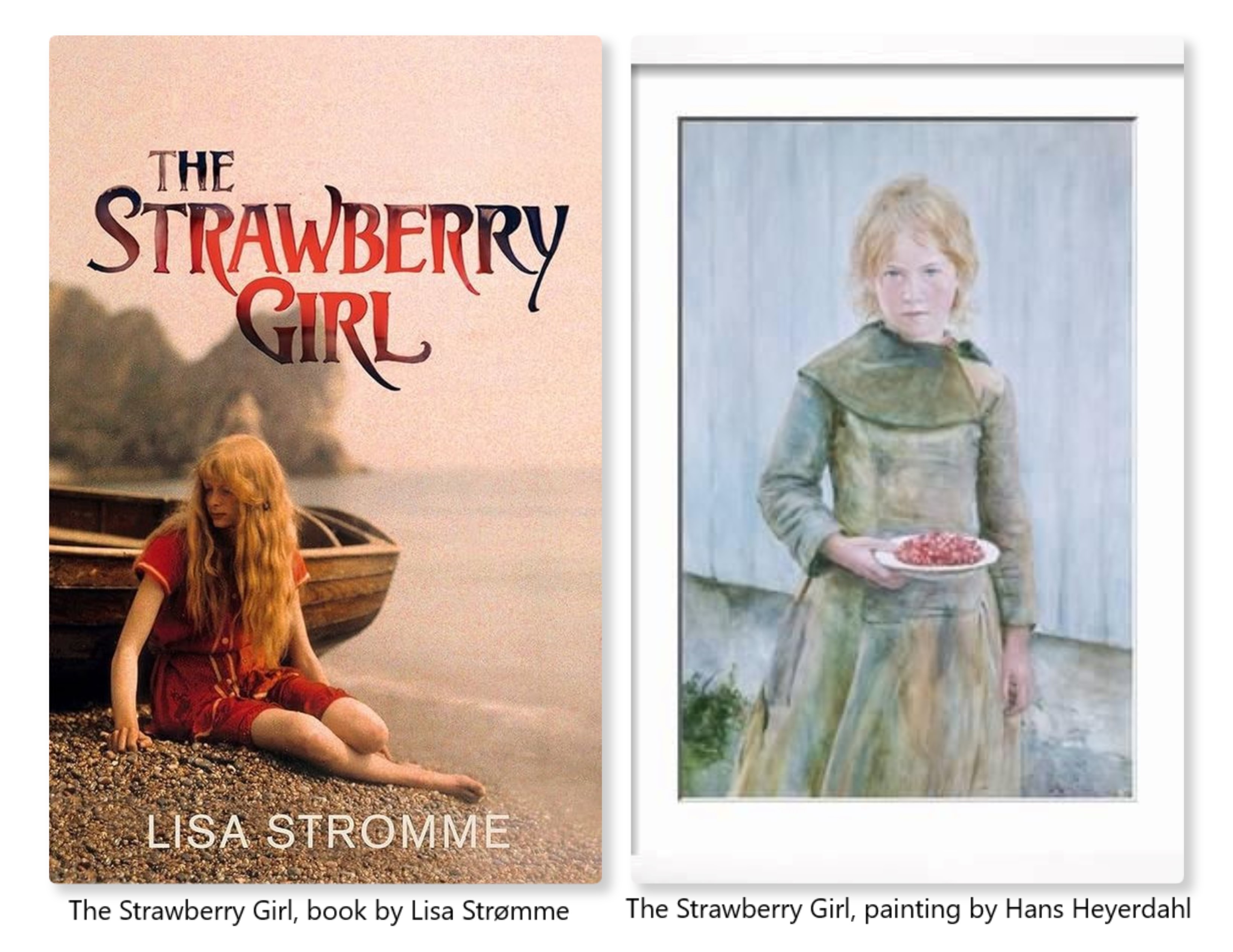
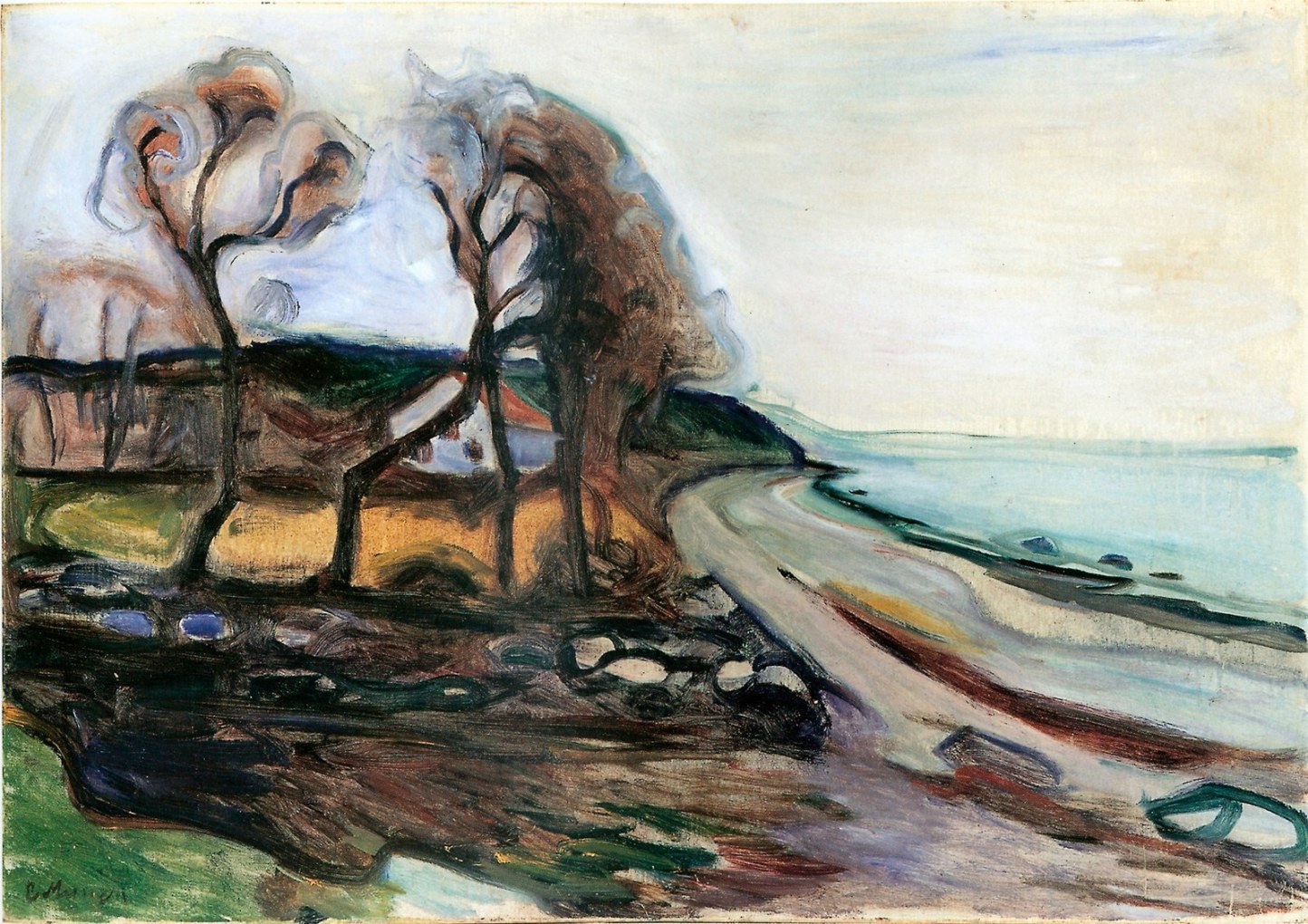
Strømme created a summer of romance and drama, mixing in the Ihlen family (they were real) and setting the story around Edvard Munch staying in Åsgårdstrand for the summer (he bought a cabin there later on, but in the book, he rents the place) and having a scandalous romance with Tullik, the youngest of the three Ihlen girls. The book is a mix of actual history and characters and fully made up ones, of actual details and paintings set into the time and context of a fully fictive story (that got its spark from a rumor, something mentioned once in a memoir of the times and places), that culminates in the creation of The Scream.
Munch is a controversial character, a (still at that point) poor artist, and the Ihlen family forbids Tullik’s and Munch’s romance, causing so much pain, that Tullik is sent away to an asylum (see? see!) because she is deemed insane while she herself claims she is just broken down with pain. Munch pours his anguish and devastation into painting The Scream, which the narrator herself, stuck between the lovers, being a friend to both, can hear, even after the painting is hidden under loose floorboards.
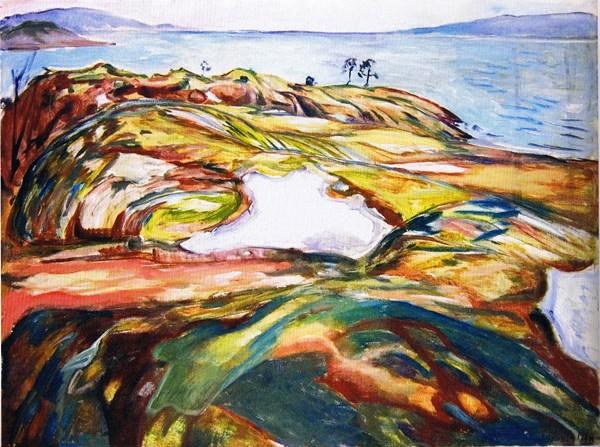
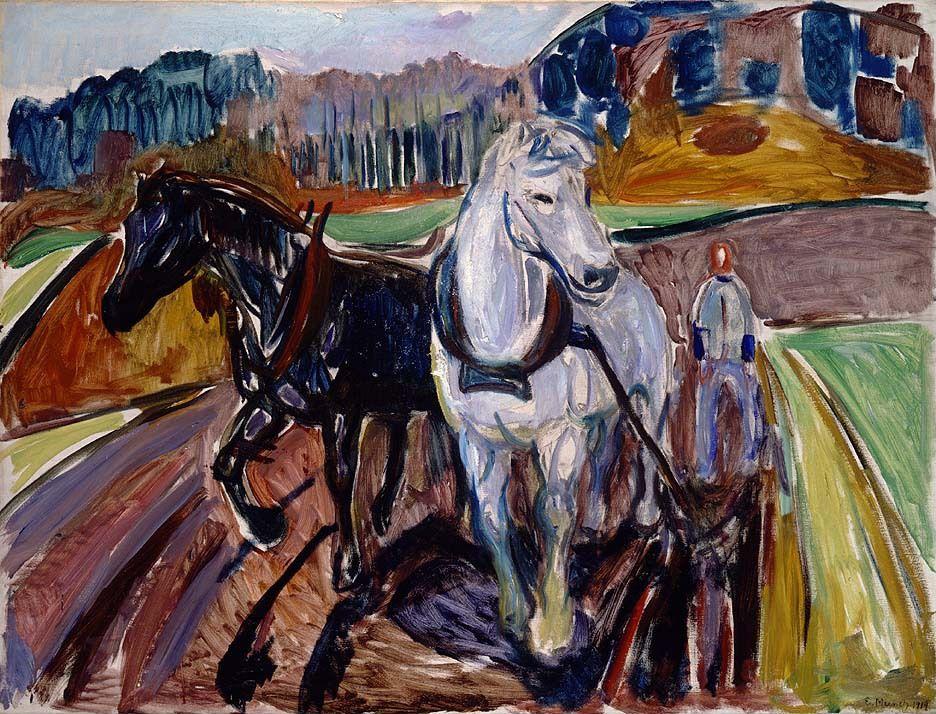
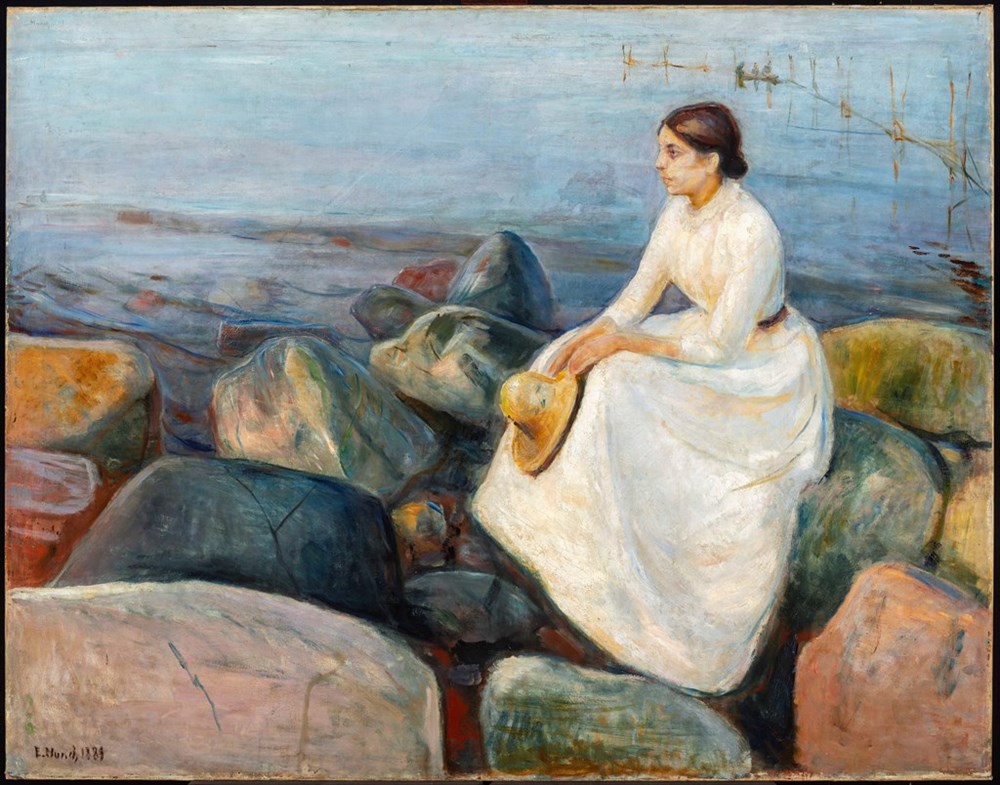
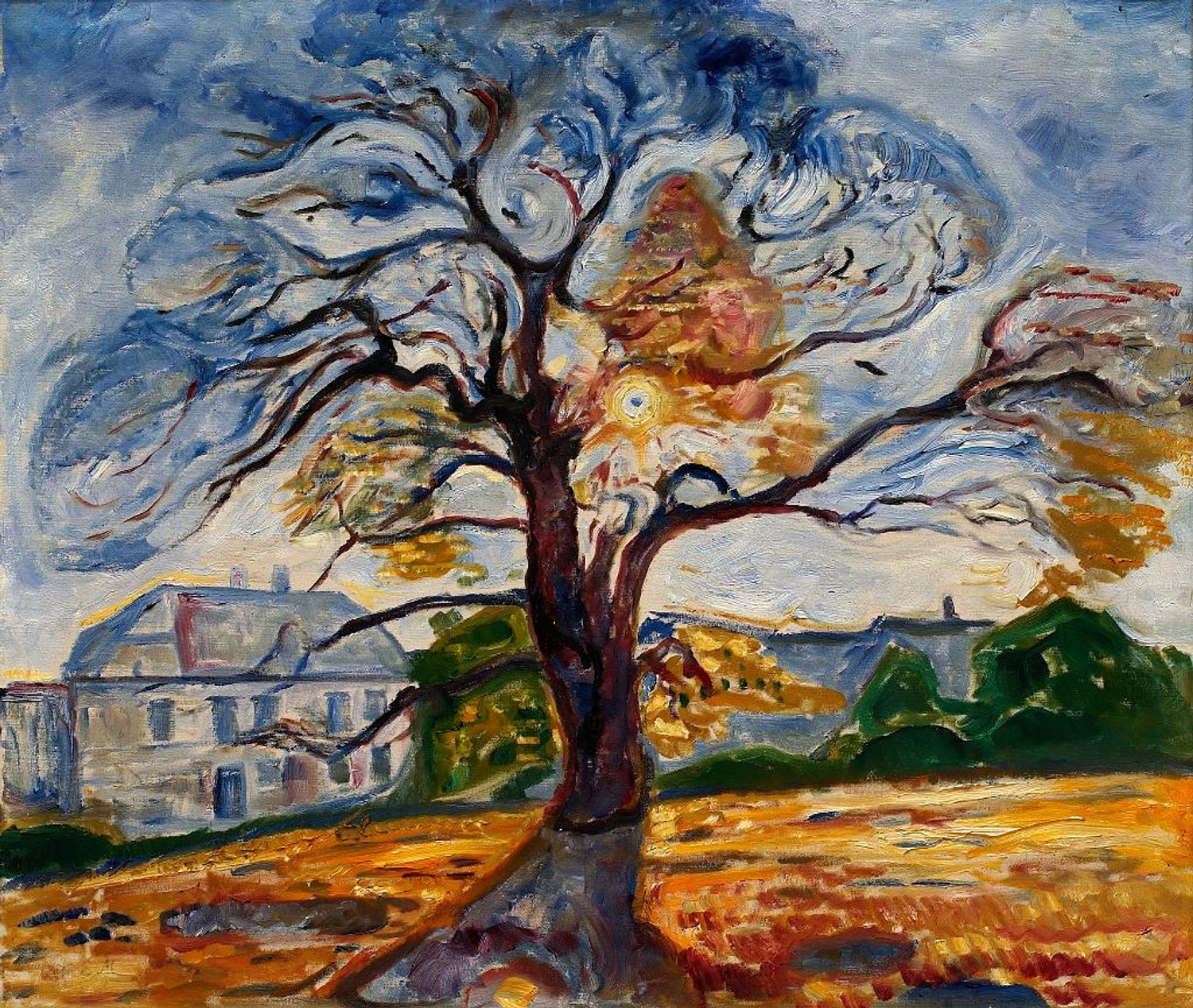
The author explains the fiction vs. facts in her afterword, but I had to know more, so I googled. I also had to google Munch’s paintings a bit. I knew The Scream, obviously, who doesn’t? But Strømme described a whole lot of other ones in the book too (listing them all at the end of the book), piqueing my interest. And while I’m no art enthusiast nor connoisseur, I felt like Munch should be known for so much more than just The Scream, which really isn’t even at the top of my list, maybe not even on the list of what I now call my favorite Munch paintings, after scouring the Internets for them. Obviously still just the tip of the iceberg. But a love was born.

Another kind of intrigue – as much as it pains me to admit it 😀 – started after reading the Wuthering Heights (by Emily Brontë). An abomination of a book, if you ask me! Jane Eyre (by Charlotte Brontë), which I also read only a couple years ago or so, is a bit less brutal, but likewise describes harsh, miserable existances void of any joy. Extremely heavy reads that bring no joy to the reader either, which is why I personally cannot comprehend why both or either of those have become such icons and favorites, that frequently are used as the literary obsessions of protagonists in modern books – as is also the case of Opaline in The Lost Bookshop.
Around the time of finishing the Heights, I poured out my full appallment into a Facebook post in a bookish group:
If I thought Jane Eyre miserable, this book is downright horrible! What kind of mind conjures up these abominable stories? What kind of life did the Bronte sisters have to produce such cruel and unusual characters and narratives? And what has compelled the later generations to deem this utter social garbage some sort of classics? Why are these so often depicted as comfort reading for a protagonist of a contemporary book?
I have read these out of curiosity and now that it has been satisfied, I will never ever open them again. Horror stories I can comprehend, while I don’t like them either, but these are pure gluttony on human cruelty and misery, without even a twist of any other plot than to narrate the spiteful life of a bitter lot of people poisoning one another further.
I sincerely hope life was not like that back then in general, but that these books dwell on something as not mainstream as such would be today. I know similar stories could be written just as well about and in any time and age, and surely have, but my point remains. What has one suffered to be able to write a novel of sheer hate and malice? And why do readers dwell on the shit so?
And no, I don’t like that style of realism in contemporary books (or movies) either. Anyway, a rather interesting discussion followed my post, leading me to learn more about the sisters Brontë, their life in the moors, and their less known and popular publications, and more over: want to undestand and learn even more!
So what did I do besides google? I bought more books. Not just the recommended Anne Brontë book The Tenant of Wildfell Hall, but actually nearly all of the combined sisters Brontë non-poetry books (by Charlotte: The Professor, Villette, Shirley, and by Anne: Agnes Grey, The Tenant of Wildfell Hall), and a combined biography of the sisters: The Brontë Sisters: Life, Loss and Literature, by Catherine Rayner. I quenched my curiosity of the two most popular books, but I gained further curiosity about the books that people all but forgot, and about the life of the authors themselves.
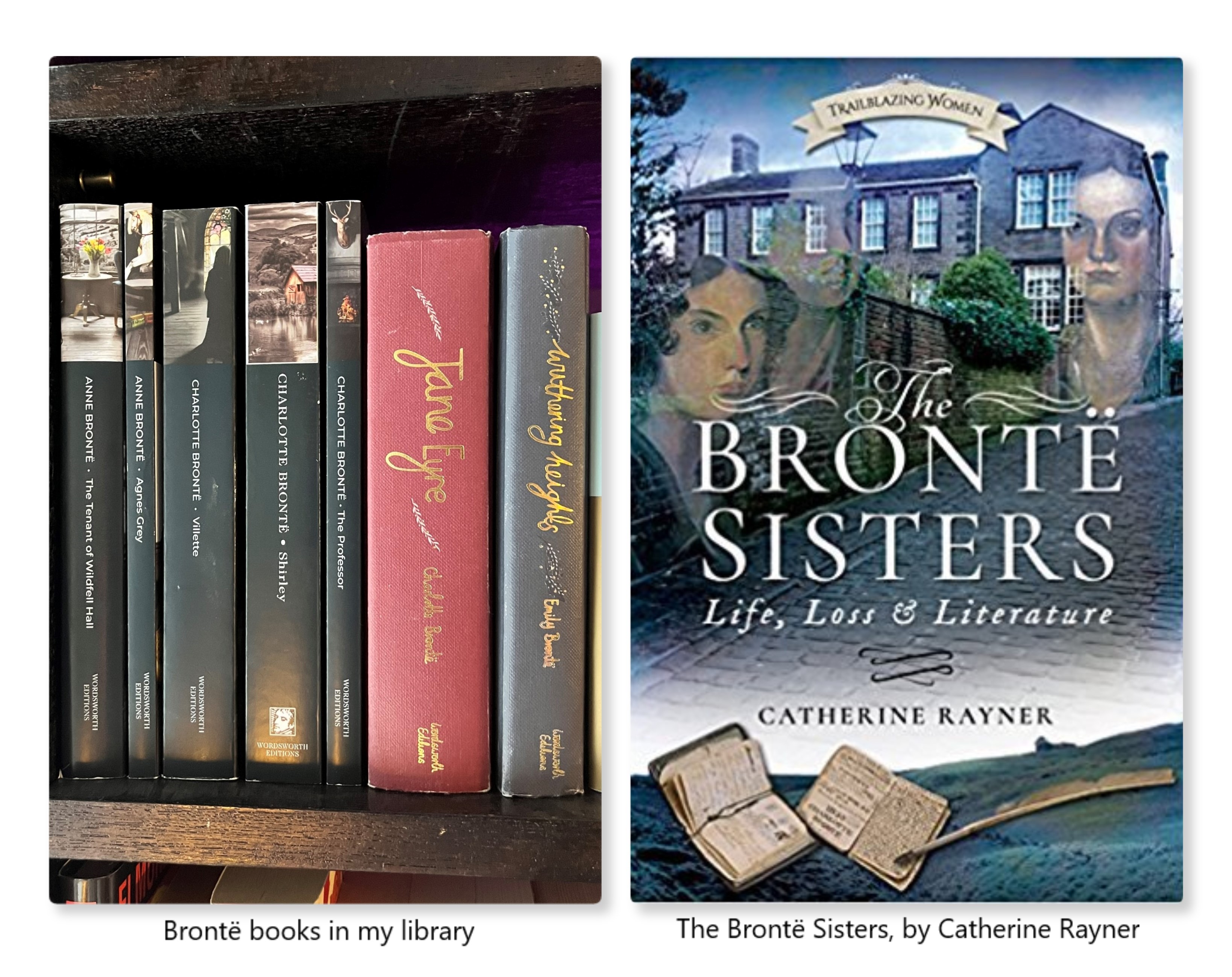
This intrigue is yet to be fulfilled, though, as the books are currently just staring at me from the shelves a bit accusingly, while I’m waiting for the right mood to hit me. It might, after the story of Opaline, due to her obsession and research. Actually, that manuscript she’s hiding? The fictive manuscript of Emily’s second book, which also magically appears tattooed on the back of the modern time protagonist Martha, after appearing in her head line by line.
The literary world goes up and down and round and round and my interest in the written word between two covers never dwindles; if anything, it keeps on growing as new books feed new ideas, new intrigues, into my head. By new, I mean new to me, not necessarily new to the world, not necessarily new as works. And since I dont’ get paid for submerging myself in the literary now and then, nor all of the other intereseting topics to research, I need to choose. Some stuff I contend on reading simply the wikipedia article, then move on. Some I hang on to more tightly, resulting in new books to read, new ideas to have.
So many books, so little time to read. Thus, I rarely anymore read the same book twice. I pity on some occasions, too.
[Cover pic: cropped from Edvard Munch’s painting “Andreas Reading”]
 System Failure for the Masses